

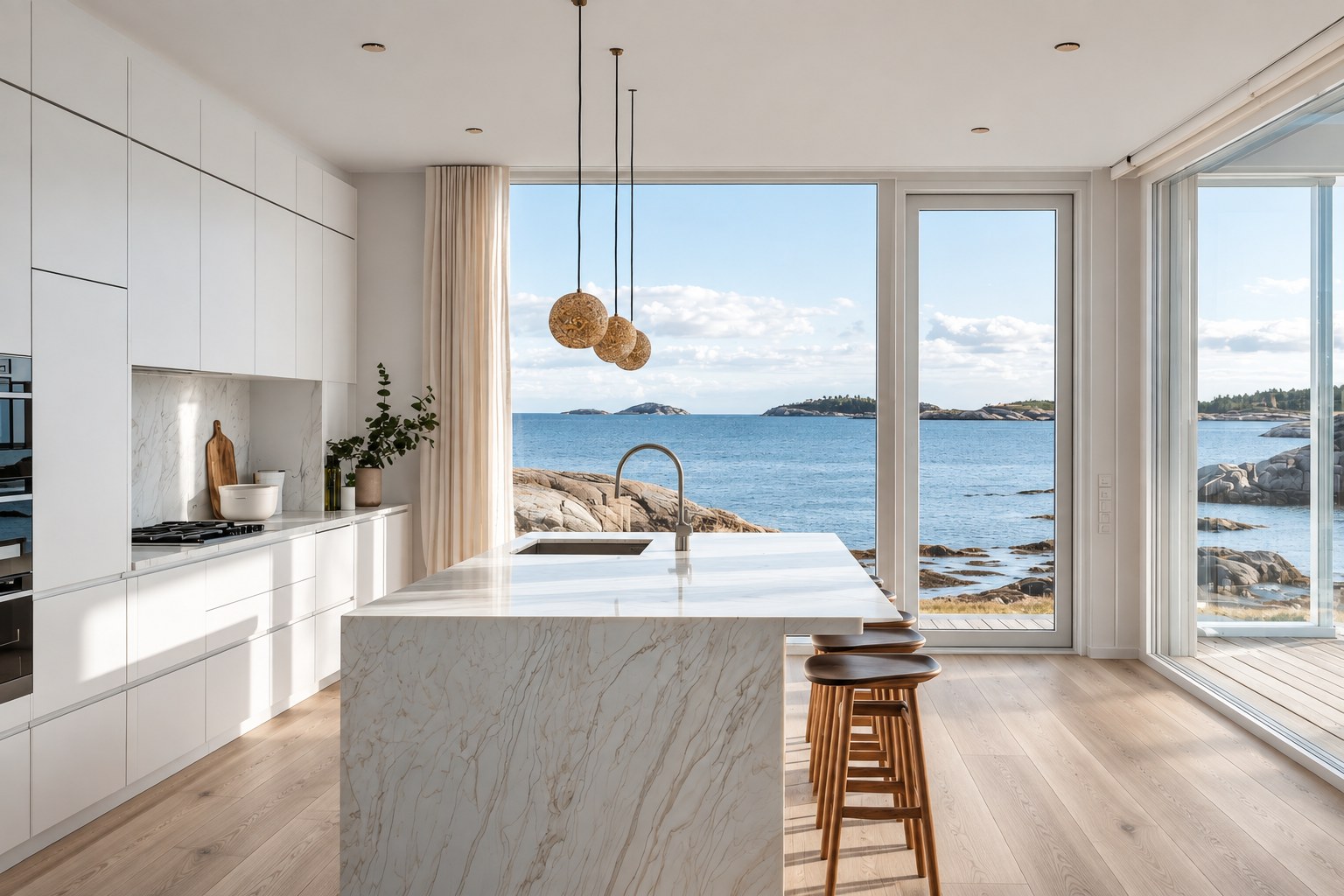
Open-concept layouts define coastal South Florida living, uniting kitchens, dining spaces, and sunlit living rooms into one expansive environment. Wide sightlines invite natural light and ocean breezes, yet continuous floor plans create unique performance demands across your living space. Daily foot traffic carries abrasive beach sand indoors, high outdoor humidity meets air-conditioned interiors, and wet paws or pool splash-out constantly reach the surface. Deciding between modern laminate and luxury vinyl tile means evaluating how each core composition handles concrete subfloors, moisture exposure, and active shoreline routines.
Material Composition and Structural Integrity
The primary difference between these two materials lies beneath the decorative print layer. Core construction reveals how both options react to ambient coastal air and subfloor conditions over years of steady foot traffic.
High-Density Wood Fiber in Modern Laminate
Modern laminate relies on a high-density fiberboard (HDF) core made from compressed natural wood fibers. Premium collections feature melamine resin coatings and topical water-repellent edge seals that protect against day-to-day spills. Today's laminate flooring replicates the deep wire-brushed textures, matte finishes, and authentic grain patterns of European white oak, making it an attractive choice for contemporary seaside aesthetics. The dense surface layer offers exceptional defense against pet claw marks and heavy furniture indents. Because the core contains natural wood fibers, prolonged exposure to excessive humidity or trapped moisture can cause edge swelling over time.
Polymer Cores in Luxury Vinyl Tile and Plank
Luxury vinyl tile and plank rely on a 100 percent synthetic structure, built around a stone polymer composite (SPC) or solid polyvinyl core. Rigid-core luxury vinyl provides complete dimensional stability in the presence of liquid, meaning standing water, coastal humidity shifts, and damp concrete slabs will not cause the planks to cup, buckle, or warp. Above the core sits a high-definition image film protected by a clear polyurethane wear layer, frequently reinforced with ceramic bead technology. The resulting plank provides resilient underfoot cushion while staying impervious to direct water exposure.
Performance Factors for Coastal Open-Concept Homes
Unifying an open living room, dining area, and kitchen demands a single floor surface that performs equally well across dry relaxing zones and wet food prep areas.
Subfloor Moisture and Slab Adaptation
Most single-family residences in Boynton Beach and waterfront condos along Boca Raton sit directly on poured concrete slabs. Concrete constantly absorbs and releases subfloor vapor due to high regional water tables. Synthetic LVT cores create a non-porous moisture barrier that handles slab moisture emissions when installed with standard vapor underlayment. Laminate floating floors need specialized, premium moisture barriers beneath the HDF core to prevent vapor penetration from below.
Sand Abrasion and Daily Wear
Beach sand contains hard quartz granules that act like fine sandpaper under footwear and bare feet. Laminate features an aluminum oxide wear layer rated on the AC (Abrasion Criteria) scale, delivering top-tier resistance against fine micro-scratches. Luxury vinyl resists micro-scratches effectively with commercial-grade 20-mil or 22-mil wear layers, but heavy, sharp sand particles under dragging items can leave scuffs on soft vinyl surfaces if you do not sweep regularly.
Key Advantages at a Glance
Both materials deliver specific strengths depending on the main priorities of your remodel:
LVT Water Resistance: Built with a 100 percent waterproof core that withstands kitchen spills, pet accidents, and wet swimwear tracking in from the pool.
Laminate Scratch Defense: Outperforms softer surfaces in resisting claw marks from large dogs and grit-driven surface hazing.
Acoustic Comfort: The flexible polymer build of LVT absorbs step sound naturally, helping you meet strict condominium Impact Insulation Class (IIC) rules.
Direct Sunlight Stability: Dense rigid-core vinyl resists thermal expansion when floor-to-ceiling sliding glass doors let in intense afternoon sun.
Visual Realism: Premium laminate offers deep embossed-in-register wood grain textures with crisp, realistic board-to-board bevels.
Find Your Coastal Flooring Solution
Evaluating plank textures, core thicknesses, and color undertones in person ensures your new floors match your home's unique coastal light. Our team at Giant Carpet and Flooring helps you compare full-sized boards side by side so you can select the ideal surface for your remodel. Visit our local Boca Raton showroom or stop by our Boynton Beach showroom to test how each option feels underfoot. When you want tailored measurements and personalized recommendations for your open layout, our in-home design consultation pairs you directly with our local flooring specialists.
Frequently Asked Questions
Can you run laminate flooring continuously into a coastal kitchen?
Water-resistant laminate functions well in kitchen spaces if you wipe up liquid spills promptly. For true open-concept layouts where patio doors, dishwashers, and pool access paths connect without transition strips, waterproof flooring provides reliable peace of mind against unnoticed leaks.
How does coastal humidity affect floating floors?
Wood-based laminate expands slightly when indoor relative humidity rises during rainy summer months, requiring adequate perimeter expansion gaps along baseboards. Rigid-core LVT exhibits minimal dimensional change, staying flat during sudden humidity spikes.
Which surface feels more comfortable under bare feet?
Luxury vinyl plank features a softer composition that yields slightly underfoot, absorbing ambient room warmth and reducing leg fatigue. Laminate feels firmer, cooler, and denser, closely mirroring the solid feel of traditional hardwood installed over concrete.


